
The answer: quote-form submissions went from 1.93% of website users to 10.51% — about 5.4× — after one drywall company's site was rebuilt in May and June 2026. The biggest single change wasn't the headline. It was putting the estimate form on the page the visitor already landed on.
What the old page looked like
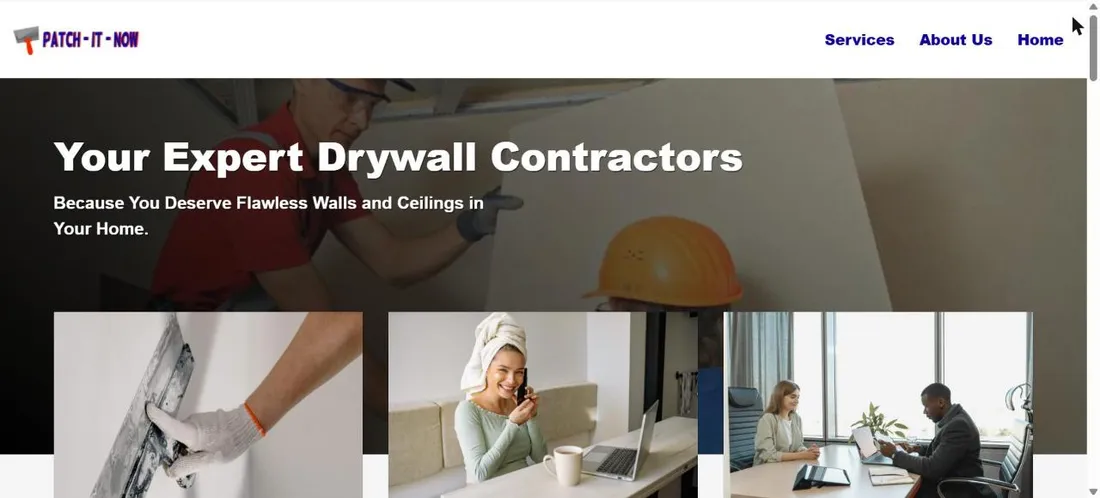
Patch-It-Now was my first client, and they were completely okay with me publishing these screenshots — real screens and real numbers, no blurred logos, no "anonymous client in the Midwest." The old site had been sitting more or less untouched since 2022. The Internet Archive has it, so you don't have to take my word for any of this.
Then the guarantee. This is my favorite thing I have ever deleted from a website:

A homeowner with a hole in their ceiling has to decode a bear metaphor before they find out what's actually covered. That's a joke standing where a promise should be.
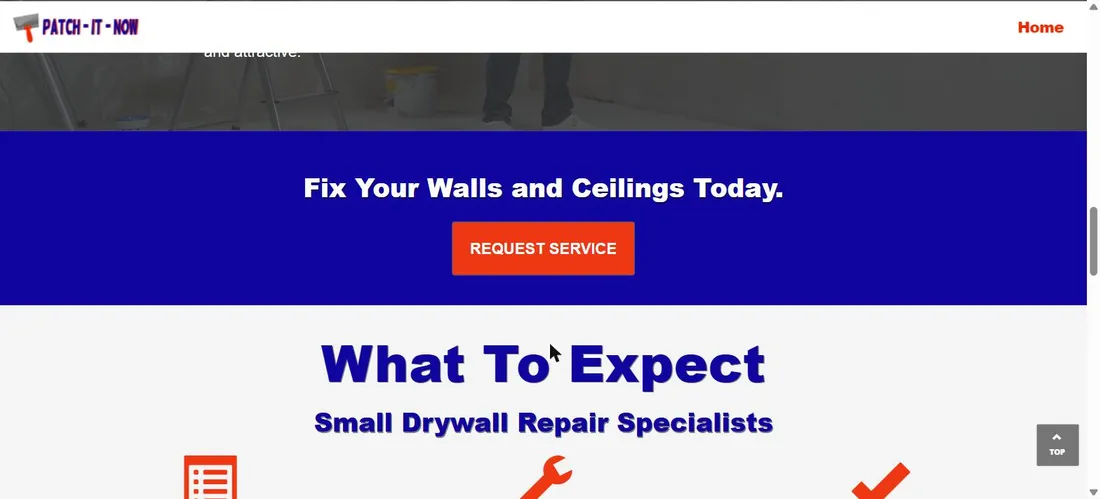
And the only thing the page ever asked anybody to do:
The funnel said the form was fine
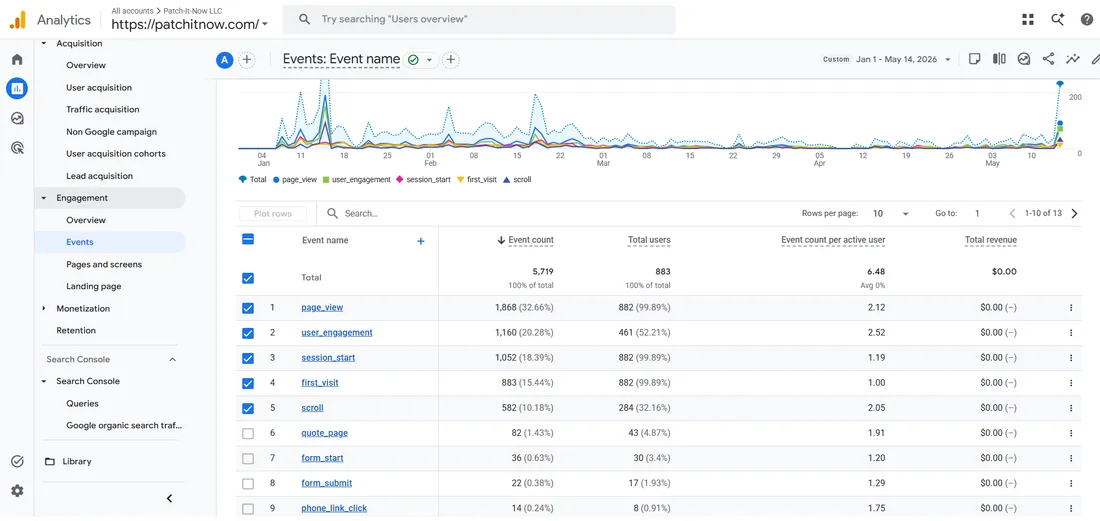
This is the part I got wrong at first. I assumed the copy was the problem. Then I opened Analytics for January 1 through May 14, 2026 and read it in order:
| Step | People | Share of all users |
|---|---|---|
| Landed on the site | 883 | 100% |
| Reached the quote page | 43 | 4.9% |
| Started the form | 30 | 3.4% |
| Submitted it | 17 | 1.93% |
Look at the last two rows. Seventeen of the thirty people who started that form finished it. The form worked. The quote page worked. Ninety-five percent of visitors just never got there — because the offer was one click and one page load away from every single person who needed it, which turns out to be the same as not being there at all.
What I changed
The rebuild ran May 15 to June 11, 2026. Four things did the work.
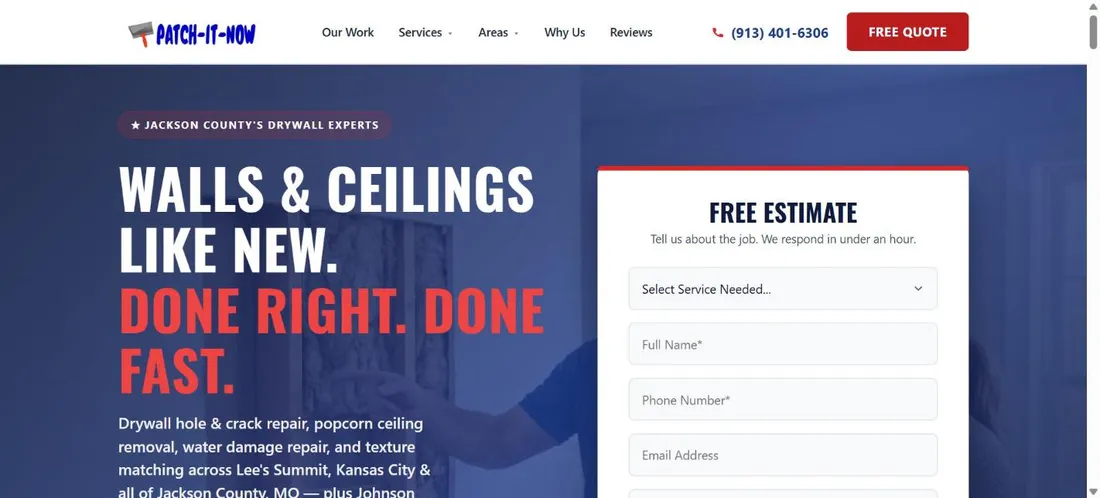
The headline stopped describing the company. "Your Expert Drywall Contractors" became "Walls & Ceilings Like New. Done Right. Done Fast." — the finished wall, and how fast. The line under it names the four actual jobs and the counties.
The guarantee stopped being a metaphor. The bear was replaced with the thing a homeowner is actually afraid of: if a patch ever telegraphs back through the paint, we make it right.
The ask moved into the hero. A "Free Estimate" form now sits next to the headline on every page, and the first thing it asks is what the job is — not the visitor's name. Generic buttons became job-shaped ones: "Quote My Hole Repair," "Quote My Water Damage," "Quote My Ceiling Project."
The page stopped hiding the money and the clock. Flat-rate ranges went on in public, along with a response-time promise and the eighteen cities served. The old page named one city, in the footer.
Month by month, with receipts
Same Analytics property on both sides. May is left out — that's the month the work was happening.
| Month (2026) | Users | Started the form | Submitted |
|---|---|---|---|
| March — old site | 136 | 2.9% | 1.47% |
| April — old site | 86 | 0% | 0.00% |
| June — new site | 156 | 17.3% | 14.10% |
| July — new site | 276 | 19.2% | 13.77% |
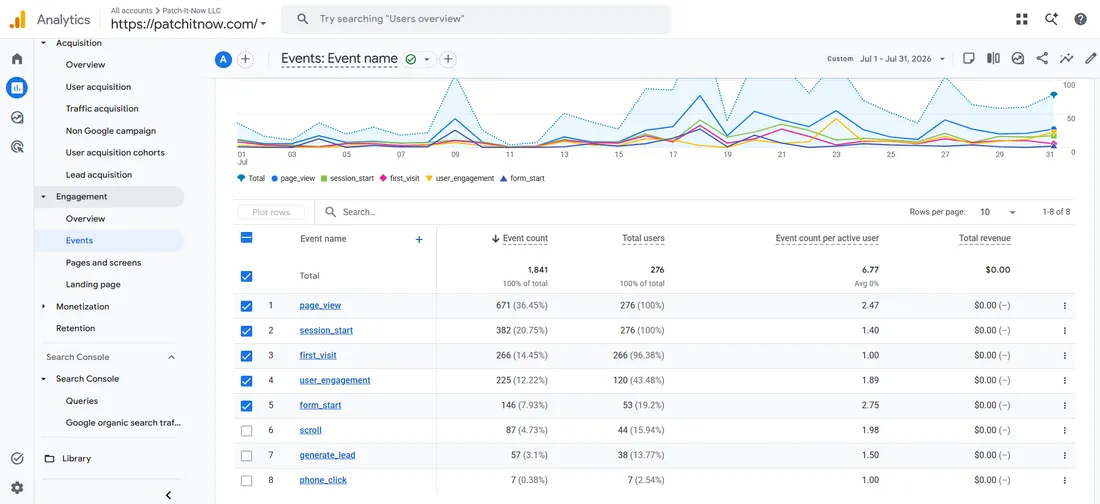
One honest note on that last column. Analytics counted 38 users hitting the lead event in July, but the form platform delivered 29 quote requests. I don't know yet why the two disagree, so the number I quote everywhere — 10.51% — is the one built on forms that actually landed in the inbox. Analytics' own reading would be 13.77%. I publish the smaller one. Those 29 forms cover July 1–28 against the full month's 276 visitors, so if anything it's understated.
Where the lift actually came from
Here's the part that convinced me the page was the problem and not the market. Split the change into its two steps, using Analytics' own form events on both sides: getting to a form at all went from 3.4% of visitors to 19.2% — 5.6 times. Finishing once you started went from 57% to 72% — 1.3 times. Multiply those and you get 7.1 times, which is the whole change.
So the step that was already working got a little better. The step that was broken is the one that carried the result. If the rebuild had just made the site prettier, you'd expect that split to look the other way round.
Fair warning on that 19.2%: some of the jump is mechanical. The form sits on every page now, so "getting to a form" stopped being a separate trip. That's the whole point of the change — but it's not the same thing as visitors suddenly being five times keener.
Three things that could be the real cause instead
Anybody selling you a rebuild will show you a chart like the one above and stop talking. Here is what else changed in the same window, because you should know it before you believe me.
The paid ads went off. Paid search went from 304 sessions to 27. So the after-period traffic is a lot more organic than the before-period traffic. That is a traffic-mix change, not a copy change. Worth knowing: people clicking a paid ad for "drywall repair" are about as ready to buy as anybody gets, so losing them should have pushed the rate down.
Total traffic went down, not up. Fewer people, higher share. If somebody shows you a conversion-rate win, always ask what happened to the denominator. Here it shrank.
It's a different season. January through May against June and July is not a neutral comparison for Kansas City home services. Summer is better for interior repair work than late winter.
What I'd hang my hat on anyway: both clean months on the old site (1.47% and 0.00%) sit below the 1.93% average I compared against, so I used the number most generous to the old page. And both months on the new site agree with each other.
What to do with this on your own site
Before you rewrite a word, open Analytics and count how many people ever reach the page your form is on. If that number is small, the form's copy is not your problem and no headline will save you. Put the ask where the visitor already is, ask what the job is before you ask who they are, and put a real promise where the clever line used to be.
The ad side of this same account is Guide Nº 001 — what a drywall lead actually costs — and the whole engagement is written up in the case study.
Want to know whether your site has this problem? I'll count the funnel with you on a phone call and tell you straight — it's free. Get your lead-flow audit.