

Skip to content
The Blue Collar Marketer
Updated September 2026 · Leads first, then you pay

Marketing for tree servicesStorm calls now. Planned removals all year.

A tree on the roof gets Googled from the driveway, and the homeowner books whoever answers with a crane and insurance. The rest of the year, the calendar fills — or doesn't — on planned removals and trims that were researched for weeks. I build the engine for both: the ads that catch the storm, the listing that wins the comparison, the site that ranks for the planned work. And the first leads land before you pay me anything.

  • First leads land before any bill
  • Slow month later? Refunded
  • You own every account I build
Contractor in a hard hat taking a phone call at a jobsite

The next removal is calling.

Want more jobs?

Storm calls going to the crew with the bigger sign? Fill this out and I'll tell you what I'd fix.

Best way to reach you

Free. No contract. I text or call you back within one business day — usually the same day.

5.0★ · 89 Google reviews on my first client's listing · No money down · You own every account

Does this sound familiar?

Storm surge, then nothing

Three weeks of overtime after the ice storm, then a quiet March because nothing you built keeps ringing when the weather is nice.

Losing to the unlicensed crew

A pickup and a chainsaw underbids you by half, the homeowner doesn't know what insurance means until a limb goes through a window, and you get the call to fix it.

Estimates that ghost

Drive out, climb, quote a $2,400 removal — and hear nothing, because the homeowner collected four bids and picked the one whose reviews mentioned cleanup.

How tree services get picked. Three parts.

You keep the crews in the trees. I run the three things that decide whose phone rings…

Ads at the top of Google

Tree services is a Local Services Ads category. After the storm, your name sits at the top with the Google Verified check, and you pay when a homeowner calls or messages — never for clicks.

Storm day finds you first.

The map listing

Category "Tree service", certified-arborist and insurance mentions in the description, drone before/after photos, and reviews that name the job — "removed the oak, cleaned up like they were never here."

Free calls, every week.

A website that works

A page per money job — removal, trimming, stump grinding, emergency, lot clearing — with real price ranges and a form that asks for a photo of the tree.

Ranks for the planned work.

The whole deal runs the same way for every trade I take: leads first, then you decide →

What a tree service lead is worth.

Run your own math, not an agency's slideshow. Say a booked removal clears $700 after crew and equipment, and half the callers book:

$700

kept from a booked removal

half the calls

turn into booked work

≈ $350

what each lead is worth to you

Pay $60–$120 for something worth $350 and the argument is over. Tree work has a wide ticket range — a $250 trim and a $4,000 crane removal come from the same search — so the job types you switch on and the questions the form asks decide what the average lead is worth. Ballparks, not promises; the audit call runs it with your book.

Ballpark for the metro: $300–$800 trims · $800–$3,000 removals · $100–$400 stump grinding · storm emergencies at a premium.

Ranges are market ballparks for context, not client claims. Bring your real book to the audit call — we use yours, not mine.

Certified and insured wins the comparison.

Homeowners can't judge a cut. They can judge "ISA certified arborist," "fully insured," and thirty photos of a clean lawn after a removal. The map listing's primary category has to be Tree service, the description has to say the insurance and certification in the first line, and the reviews have to mention cleanup — because cleanup is what homeowners are afraid of.

Ask for the review at the truck while the lawn is still raked. Posting daily won't move the ranking; reviews and photos will. How I run the listing →

Storm season is set up in the sunshine.

The crews that own the week after the storm were verified in the ads months earlier, with a weekly budget that stayed on and a response rate near 100%. When the wind hits, their ads are already ranked and the homeowner's first call goes to them. Set the screening up in the quiet season, keep emergency hours honest on the listing, and answer the phone at 6 a.m. after the storm — the marketing did its job before the storm did. How I run these ads →

The planned work comes from the website.

Removals and trims are researched: "how much does it cost to remove a tree," "tree trimming {city}," "stump grinding near me." A site with a page per job type, price ranges and a photo-quote form ranks for those searches all year and hands you the planned work between storms. It's also where the homeowner checks your insurance claim before the crew climbs. How I build sites that rank →

Where's the proof?

The proof is my father's drywall company — 52 charged ad leads in July 2026 at $39.89 apiece, a five-star listing, and a website that rings on its own. Tree tickets are several times a drywall patch and the storm searches are more urgent, which is exactly why the same engine is the bet — and why the first leads land before you pay.
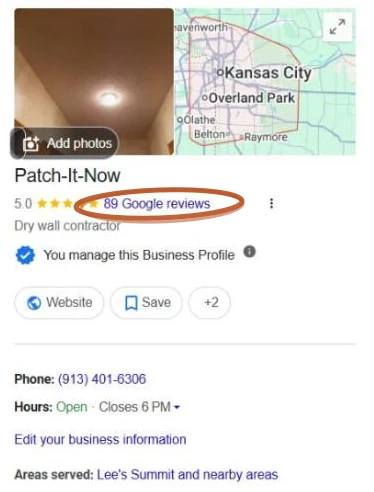
Google listing: Patch-It-Now, 5.0 stars, 89 Google reviews circled, verified profile
The listing I built for my first client, July 31, 2026. The tree service version of this is the job.

Read the full case study, month by month →

Straight answers for tree services

Are Local Services Ads worth it for a tree service?

Usually yes — tree work has urgent searches and mid-to-high tickets, and the Tree services category screens for insurance, which is exactly the signal homeowners want. The math holds when the phone gets answered and the estimate happens the same day.

How do I compete with cheaper, uninsured crews?

Don't compete on price; compete on the screen the homeowner is looking at. A verified ad, a listing that says insured and certified in the first line, and reviews that mention cleanup beat the pickup-and-chainsaw quote for every homeowner who's nervous about their roof.

Should I list emergency hours?

Only if you answer them. Honest 24-hour emergency hours on the listing win the storm calls; a listing that says 24/7 and goes to voicemail loses the customer and the ranking.

Do I need a website if my map listing rings?

The listing catches the searchers; the site catches the researchers — the planned removals that get quoted for weeks — and it's where the insurance and certification get checked before anyone climbs. Together they fill the year.

How much should a tree service spend on marketing?

Start from what a booked job leaves you and how many calls it takes to book one — that's what a lead is worth. Spend where leads cost less than a third of that. That math takes ten minutes on the audit call.

Trades next door

All trades →

Storm calls, and the year between them.

One call to run your close rate and what a removal pays you. If the math doesn't clear in your metro, I'll tell you that too.

Want more jobs?

Take a minute to fill out this form and I'll tell you what I'd fix.

Best way to reach you

Free. No contract. I text or call you back within one business day — usually the same day.

5.0★ · 89 Google reviews on my first client's listing · No money down · You own every account