
What a handyman lead is worth.
Run your own math, not an agency's slideshow. Say a booked job leaves you $180 after materials, and six of every ten callers book:
$180
kept from a booked job
6 in 10
calls book
≈ $108
what each lead is worth to you
Handyman leads are among the cheapest in Local Services Ads because the ticket is small — and that's the trap: a $30 lead is still expensive if it's forty minutes away. The win is tight service areas and job types trimmed to the work you want, so the leads stack up on the same side of town. Ballparks, not promises; the audit call runs it with your numbers.
Ballpark for the metro: $150–$450 small jobs · $75–$125 per hour · $150–$250 minimum charges · half-day and full-day bundles.
Ranges are market ballparks for context, not client claims. Bring your real book to the audit call — we use yours, not mine.
The side door other trades borrow.
The Handyman category is the door drywall contractors, tile installers and other unlisted trades use to run Google's pay-per-lead ads — which tells you how much demand runs through it. If you are a handyman, you get the front door: every job type, set up honestly, with the credit ledger watched weekly. Since Google cut the "job type not serviced" credit in 2024, the job types you switch on are the only filter you have, so we switch on exactly what you want.
Response rate and reviews set your rank inside the ads. Answer live, text back missed calls in five minutes, and ask for the review at the door. How I run these ads →
Landlords are the repeat customer.
Homeowners call once. Property managers call every turnover, every year, for the same list: patch, paint touch-up, door hardware, caulk, fan, blinds. A map listing with "rental turnover" in the services, a site page written for landlords, and thirty introductions to the small property managers in your metro build the schedule that doesn't depend on the ads.
The listing's primary category has to be Handyman; secondary categories only for what you truly do. How I run the listing →
Set the terms before the phone rings.
Scope creep starts when nothing set expectations. A minimum charge on the site, a "what I do / what I don't" list, a photo-quote form, and a half-day bundle turn the "quick shelf" call into a booked morning at a rate you chose. The site is the filter; by the time they call, they've read the terms.
And it ranks for the boring searches — "handyman near me", "TV mounting {city}", "door repair {city}" — that keep the weeks full between the ads. How I build sites that rank →
Where's the proof?
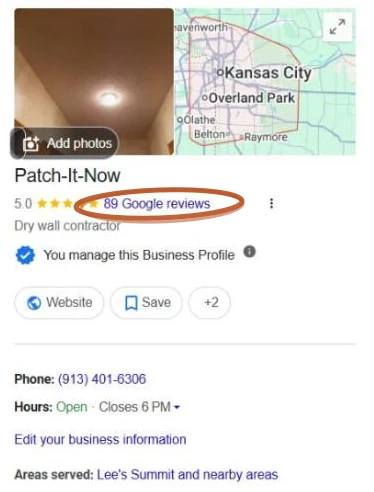
The proof is my father's drywall company — a repair trade with handyman-sized tickets — 52 charged ad leads in July 2026 at $39.89 apiece, a five-star listing, and a website that rings on its own. Same math, same engine, and the first leads land before you pay.